


Description
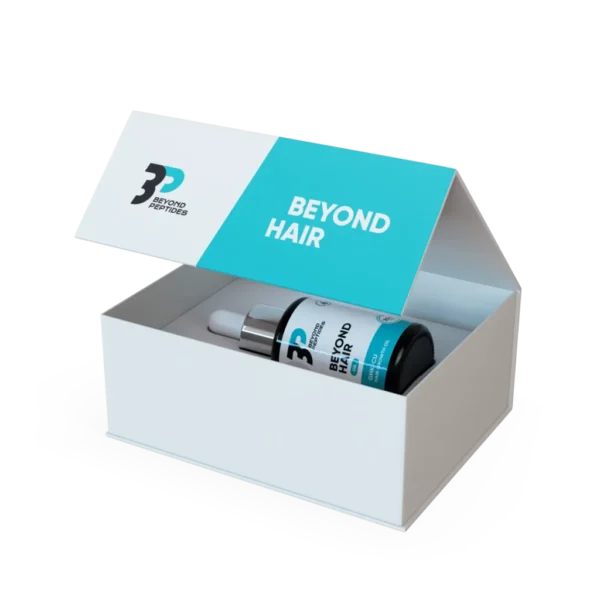
Buy Beyond Hair Peptide Online EU
Welcome to euresearchpeptides.com — your trusted source for premium, laboratory-grade research peptides in Europe. Our Beyond Hair peptide, scientifically known as Nicotinoyl Tripeptide-1, is a synthetic cosmetic peptide widely studied for its role in hair follicle stimulation and skin extracellular matrix remodeling. This peptide is strictly intended for laboratory research use only and is not for human consumption. buy beyond hair peptide Europe
What Is Beyond Hair Peptide (Nicotinoyl Tripeptide-1)?
Nicotinoyl Tripeptide-1 is a biomimetic peptide composed of three amino acids (Glycine-Histidine-Lysine) conjugated with biotin, a vitamin known for its role in keratin structure and hair health. This peptide is a synthetic version of a naturally occurring growth factor fragment that binds with high affinity to specific receptors on dermal papilla cells and fibroblasts. buy beyond hair peptide Europe
Unlike full-length growth factors, Nicotinoyl Tripeptide-1 offers targeted research applications for studying hair growth mechanisms and skin rejuvenation pathways. It is widely recognized as a signaling peptide, making it a valuable research tool for investigators studying anagen phase initiation in hair follicles and collagen synthesis in dermal tissues. buy beyond hair peptide Europe
How Beyond Hair Peptide Works: Mechanism of Action
In research models, Nicotinoyl Tripeptide-1 exerts its biological effects through several well-characterized mechanisms:
Stimulation of Dermal Papilla Cells: Research demonstrates that Nicotinoyl Tripeptide-1 activates dermal papilla cells, which play a crucial role in regulating the hair growth cycle. This activation is associated with the induction of the anagen (growth) phase of the hair follicle.
Extracellular Matrix Remodeling: Beyond Hair peptide actively stimulates the synthesis of key structural proteins essential for tissue architecture. This includes the stimulation of collagen type IV and laminin 5, which form the basement membrane supporting healthy hair follicles and skin structure.
Collagen and Elastin Synthesis: The peptide acts as a signaling molecule, encouraging skin cells to boost production of essential extracellular matrix components. Collagen provides structural support and firmness, while elastin allows tissue to stretch and return to its original shape.
Biotin Conjugation: The biotin moiety enhances binding affinity to cellular receptors and improves the peptide’s stability in research formulations. Biotin is also independently studied for its role in keratinocyte biology and hair shaft integrity.
Research Applications
| Research Area | Application |
|---|---|
| Hair Growth Research | Studies on anagen phase induction, dermal papilla cell activation, and follicle cycling |
| Cosmetic Dermatology | Investigation of hair thinning, alopecia models, and androgenetic hair loss mechanisms |
| Skin Rejuvenation | Research on collagen synthesis, elastin production, and extracellular matrix remodeling |
| Anti-Aging Studies | Preclinical models of wrinkle formation, skin density reduction, and loss of elasticity |
| Wound Healing | Studies on basement membrane reconstruction and tissue repair mechanisms |
Performance Benefits for Research
| Attribute | Specification |
|---|---|
| Purity | >98% (HPLC verified, MS confirmed) |
| Peptide Name | Biotinoyl Tripeptide-1 |
| Sequence | Biotin-Gly-His-Lys-OH |
| Molecular Formula | C30H48N10O7S (for Biotin-GHK) |
| Molecular Weight | Approximately 692.83 g/mol |
| CAS Number | Not publicly assigned (research compound) |
| Appearance | White to off-white lyophilized powder |
| Endotoxin Level | <0.05 EU/mg |
| Solubility | Soluble in water, DMSO, and aqueous buffers |
Solubility Profile
Biotinoyl Tripeptide-1 exhibits good solubility in aqueous solutions:
-
Primary solvent: Sterile distilled water or bacteriostatic water
-
Alternative solvents: DMSO for higher concentration stock solutions
-
Dilution buffer: Phosphate buffered saline (PBS) at pH 7.2-7.4
-
Reconstitution guideline: Add 1 mL of sterile water to a 5 mg vial yields approximately 5 mg/mL concentration
Stability and Storage Recommendations
| Condition | Storage Method |
|---|---|
| Lyophilized Powder | Store at -20°C (-4°F) or below, protected from light and moisture |
| Reconstituted Solution | Refrigerate at 2-8°C (35.6-46.4°F), use within 30 days |
| Long-term Stability | Keep lyophilized and frozen; avoid repeated freeze-thaw cycles |
| Shelf Life | 24 months when stored properly in lyophilized form |
Handling Protocols
For research use only. Proper handling ensures experimental integrity:
-
Allow vials to reach room temperature before opening to minimize condensation
-
Reconstitute by injecting diluent slowly down the vial wall; avoid foaming
-
Gently swirl or roll until fully dissolved — do not shake
-
Label with date, concentration, and lot number
-
Store reconstituted peptide at 2-8°C and use within 30 days
Reconstitution Guidelines
For a 5 mg vial of Biotinoyl Tripeptide-1:
-
Add 0.5 mL sterile water for 10 mg/mL concentration
-
Add 1 mL for 5 mg/mL concentration
-
Add 2 mL for 2.5 mg/mL concentration
For a 10 mg vial:
-
Add 1 mL sterile water for 10 mg/mL concentration
-
Add 2 mL for 5 mg/mL concentration
Quality Standards at EU Research Peptides
Our Beyond Hair peptide is manufactured under strict quality control protocols:
-
Synthesis: Solid-phase peptide synthesis (SPPS) with Fmoc chemistry
-
Purification: HPLC purification to >98% purity
-
Verification: Mass spectrometry (MS) confirmation of molecular weight
-
Quality Control: Each batch includes Certificate of Analysis (COA) with HPLC chromatogram and MS spectrum
-
Facility: ISO-classified cleanroom manufacturing
Why Researchers Choose EU Research Peptides
European-Based Operations: We are strategically located in the EU, ensuring fast, reliable shipping across Europe without customs delays.
Premium Quality: Every peptide batch undergoes rigorous third-party testing for purity, stability, and endotoxin levels.
Research Compliance: All products are labeled “For Research Use Only” and comply with EU chemical regulations.
Technical Support: Our team provides comprehensive documentation including COAs, MSDS, and reconstitution protocols.
Competitive Pricing: Bulk discounts available for research institutions and volume orders.
👉 Explore our complete catalog of research peptides at our official homepage.
Safety Considerations
Beyond Hair peptide (Biotinoyl Tripeptide-1) is intended for laboratory research purposes only. It is not for human consumption, therapeutic use, or cosmetic application at point of sale. Researchers should:
-
Follow institutional biosafety guidelines
-
Use appropriate personal protective equipment (PPE)
-
Handle all peptides with sterile technique
-
Dispose of materials according to local regulations
Frequently Asked Questions (FAQ)
What is Beyond Hair peptide (Biotinoyl Tripeptide-1)?
Biotinoyl Tripeptide-1 is a biomimetic peptide consisting of three amino acids (Glycine-Histidine-Lysine) conjugated with biotin. It is studied for its role in hair follicle stimulation and extracellular matrix remodeling in research settings. This peptide is a synthetic version of a naturally occurring growth factor fragment.
What is the molecular formula and weight of Biotinoyl Tripeptide-1?
The molecular formula is C30H48N10O7S with a molecular weight of approximately 692.83 g/mol.
What purity level does EU Research Peptides offer for Beyond Hair peptide?
Our Biotinoyl Tripeptide-1 is tested at >98% purity by HPLC with mass spectrometry confirmation. Each batch includes a Certificate of Analysis (COA) with detailed purity data.
How does Biotinoyl Tripeptide-1 work in research models?
Biotinoyl Tripeptide-1 acts as a signaling peptide, activating dermal papilla cells to induce the anagen (growth) phase of hair follicles. It also stimulates the synthesis of collagen type IV and laminin 5, which are essential for basement membrane structure and tissue support.
What are the primary research applications for Beyond Hair peptide?
Primary applications include hair growth research (alopecia models, follicle cycling studies), dermatology research (skin aging, collagen synthesis), wound healing investigations, and cosmetic ingredient formulation studies.
How should I store Biotinoyl Tripeptide-1?
Lyophilized Biotinoyl Tripeptide-1 should be stored at -20°C or below, protected from light and moisture. After reconstitution, refrigerate at 2-8°C and use within 30 days. Avoid repeated freeze-thaw cycles.
Is Biotinoyl Tripeptide-1 soluble in water?
Yes, Biotinoyl Tripeptide-1 is soluble in sterile water and bacteriostatic water. It is also soluble in DMSO and phosphate buffered saline (PBS).
What is the recommended reconstitution protocol?
For a 5 mg vial, add 1 mL of sterile water to achieve approximately 5 mg/mL concentration. For more concentrated solutions, use less diluent.
Does Biotinoyl Tripeptide-1 have applications beyond hair research?
Yes, emerging research highlights its significant potential in skin rejuvenation. The peptide actively stimulates collagen and elastin synthesis, making it valuable for anti-aging and skin density research.
Can I purchase Beyond Hair peptide in bulk?
Yes, EU Research Peptides offers volume discounts for bulk orders. Contact our customer service team for customized quotes.
How does the biotin conjugation affect peptide function?
The biotin moiety enhances binding affinity to cellular receptors and improves the peptide’s stability in research formulations. Biotin is independently studied for its role in keratinocyte biology and hair shaft integrity.
What documentation is provided with each order?
Each order includes a Certificate of Analysis (COA), material safety data sheet (MSDS), and reconstitution protocol.
How long does shipping take within Europe?
Standard shipping within the EU takes 3-5 business days. Express shipping options are available for urgent research needs.
Is Biotinoyl Tripeptide-1 suitable for cell culture research?
Yes, with appropriate sterile handling and reconstitution, Biotinoyl Tripeptide-1 can be used in cell culture studies investigating dermal papilla cells, fibroblasts, and keratinocytes.

Reviews
There are no reviews yet.