
Description
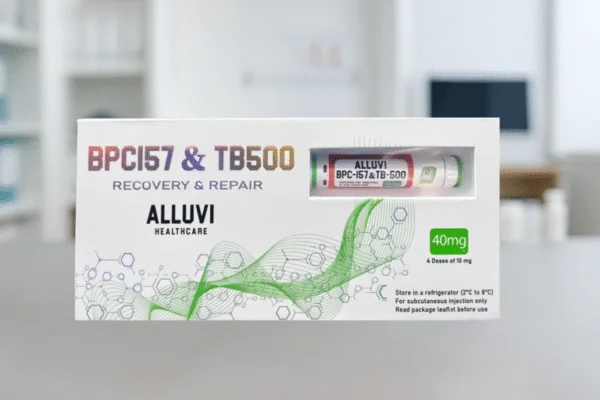
Where To Buy BPC-157 & TB-500 40mg Blend (R&D Only) – Peptide EU
The BPC-157 and TB-500 40mg blend represents a sophisticated research tool designed for laboratory investigations into soft tissue regeneration, angiogenesis modulation, and cellular repair pathways. This 40mg total peptide content formulation combines two of the most extensively studied research peptides in a convenient co-lyophilized presentation, eliminating the need for separate handling and individual reconstitution protocols. Buy BPC-157 TB-500 40mg blend Online EU
For researchers conducting studies with BPC-157 Europe and TB-500 applications, this synergistic combination offers streamlined workflow and consistent peptide ratios. Each vial contains precisely measured quantities suitable for extended in vitro and preclinical research protocols. Buy BPC-157 TB-500 40mg blend Online EU
All products are strictly for research use only and comply with research chemicals EU compliant standards. Visit our homepage at euresearchpeptides.com to explore our full range of buy peptides EU products and high purity peptides Germany offerings. Buy BPC-157 TB-500 40mg blend Online EU
Purity Specifications & Quality Assurance
Every batch of our peptides for research France and European distribution undergoes rigorous third-party testing. Each BPC-157 TB-500 40mg blend shipment includes a Certificate of Analysis with the following verification:
HPLC Purity Analysis
-
BPC-157: ≥99% peak area by reverse-phase HPLC
-
TB-500: ≥99% peak area by reverse-phase HPLC
-
Individual impurity threshold: <0.5% per impurity
Mass Spectrometry Verification
-
Molecular ion confirmation for both peptides
-
No anomalous peaks indicating synthesis byproducts
-
Complete sequence coverage verification
Endotoxin & Bioburden Testing
-
LAL test: <1.0 EU/mg (well below research threshold)
-
Sterility: No microbial growth detected
-
Heavy metals: Below detectable limits
Solvent Residue Analysis
-
Residual TFA: <0.1% by GC-MS
-
No residual solvents above ICH limits
Our commitment to transparency means every peptide supplier Spain and laboratory peptides Netherlands customer receives batch-specific documentation.
Reconstitution Guidelines
Proper reconstitution is critical for maintaining peptide integrity and ensuring reproducible research outcomes. Follow these established protocols for the BPC-157 TB-500 40mg blend .
Required Materials
-
BPC-157 TB-500 40mg lyophilized blend vial
-
Bacteriostatic water (0.9% benzyl alcohol) – included in Research Spray Add-on Kit
-
Sterile 3mL syringe with 18G needle for drawing
-
Sterile insulin syringes for dosing (1mL, 31G)
-
Alcohol prep pads (70% isopropyl)
-
Sterile sharps container
-
Nitrile gloves
Step-by-Step Reconstitution Protocol
Step 1: Workspace Preparation
Clean work surface thoroughly with alcohol. Wash hands and don nitrile gloves. Allow the peptide vial to reach room temperature (approximately 15 minutes if refrigerated).
Step 2: Surface Sterilization
Remove plastic flip-off caps from both the peptide vial and bacteriostatic water vial. Using separate alcohol prep pads, thoroughly clean each rubber stopper. Allow to air dry for 15-20 seconds. Do not blow on the stoppers.
Step 3: Concentration Calculation
For the 40mg total blend (20mg BPC-157 + 20mg TB-500):
| Bacteriostatic Water Volume | Final Concentration (per peptide) | Volume for 250mcg dose (each) |
|---|---|---|
| 2mL | 10mg/mL (10,000mcg/mL) | 0.025mL (2.5 units on U100) |
| 4mL | 5mg/mL (5,000mcg/mL) | 0.05mL (5 units on U100) |
| 5mL | 4mg/mL (4,000mcg/mL) | 0.0625mL (6.25 units on U100) |
| 8mL | 2.5mg/mL (2,500mcg/mL) | 0.10mL (10 units on U100) |
For research requiring separate dosing flexibility, 4mL or 5mL diluent volume is recommended as it provides measurable volumes while maintaining adequate concentration.
Step 4: Draw Bacteriostatic Water
Using a sterile 3mL syringe and 18G needle, draw air equivalent to your target diluent volume. Insert needle into bacteriostatic water vial, inject air to equalize pressure, then draw calculated volume of bacteriostatic water.
Step 5: Inject Diluent – Critical Technique
Insert needle into the peptide vial stopper at a shallow angle. Direct the needle tip toward the inner glass wall, not the lyophilized powder cake. Inject bacteriostatic water slowly, allowing it to run down the vial wall. Never inject directly onto the powder.
Step 6: Gentle Dissolution
Remove the needle. Gently swirl the vial in a circular motion for 30-60 seconds. Do not shake, vortex, or invert repeatedly. Mechanical shear forces can denature peptide structure. Allow 5-10 minutes for complete dissolution. If any powder remains, refrigerate for 15 minutes and swirl again.
Step 7: Visual Inspection
Hold the vial up to light. The reconstituted solution should be clear and colourless with no visible particles or cloudiness. If solution appears cloudy or contains particulates, do not use.
Step 8: Labeling and Storage
Label the vial with:
-
Peptide name: BPC-157/TB-500 40mg blend
-
Concentration: ___ mg/mL per peptide
-
Reconstitution date
-
Expiry date: 28 days from reconstitution
Storage Stability Data
| Condition | Lyophilized (Unopened) | Reconstituted Solution |
|---|---|---|
| -20°C / -80°C freezer | 24+ months | Not recommended |
| 2-8°C refrigerator | 12-18 months | 28 days |
| 15-25°C room temperature | 6-12 months | 8-12 hours |
| 37°C incubation | Not recommended | 4-6 hours |
Critical Storage Notes
-
Protect from direct light and UV exposure
-
Do not freeze reconstituted solution – ice crystal formation damages peptide structure
-
Avoid repeated temperature fluctuations
-
Store bacteriostatic water separately at room temperature
-
Once drawn into syringe, use immediately – do not pre-load syringes for storage
Solubility Profile
| Solvent | BPC-157 | TB-500 | Blend Suitability |
|---|---|---|---|
| Bacteriostatic water (0.9% BA) | Excellent (>50mg/mL) | Excellent (>40mg/mL) | Recommended |
| Sterile saline (0.9% NaCl) | Excellent | Excellent | Suitable (use within 24 hours) |
| Sterile water for injection | Good | Good | Suitable (use immediately, no preservative) |
| PBS (phosphate buffered saline) | Good | Excellent | Suitable for cell culture |
| Acetic acid (0.1%) | Excellent | Not recommended | BPC-157 only |
| DMSO | Poor | Poor | Not recommended |
For standard research applications, bacteriostatic water is the preferred diluent due to its antimicrobial properties, allowing 28-day refrigerated storage.
Known Research Applications
The BPC-157 and TB-500 combination has been investigated in numerous preclinical studies for synergistic effects in tissue repair mechanisms.
Primary Research Areas
Tendon and Ligament Healing Studies
BPC-157 has demonstrated accelerated tendon-to-bone healing in animal models through angiogenesis stimulation and fibroblast migration. TB-500 complements this through actin regulation and cell migration enhancement.
Soft Tissue Regeneration Research
The combination has been studied for:
-
Muscle tear recovery models
-
Ligament injury repair investigations
-
Cartilage protection studies
-
Wound healing research applications
Angiogenesis Modulation Studies
BPC-157 promotes new blood vessel formation via VEGF pathway activation. TB-500 enhances endothelial cell migration and differentiation, creating complementary mechanisms for vascular research.
Gastrointestinal Protection Research
BPC-157 originates from gastric juice research and continues to be studied for cytoprotective effects on gastrointestinal tissues independent of TB-500 applications.
Mechanistic Pathways
| Pathway | BPC-157 | TB-500 |
|---|---|---|
| VEGF upregulation | Yes | Yes |
| FAK activation | Yes | Limited |
| Actin polymerization | Limited | Yes (primary) |
| Anti-inflammatory | Yes (NF-κB modulation) | Yes (cytokine reduction) |
| Fibroblast migration | Yes | Yes |
| Stem cell mobilization | Limited | Yes |
Citations for specific research applications available in product documentation and Certificate of Analysis.
Safety Considerations
Required Safety Equipment
-
Nitrile gloves (powder-free)
-
Safety goggles or face shield
-
Lab coat or protective clothing
-
Sharps container for needle disposal
-
Biohazard waste container for contaminated materials
Handling Precautions
All research chemicals EU compliant products require proper handling:
-
Never pipette by mouth
-
Avoid skin contact with reconstituted solutions – use gloves at all times
-
Work in well-ventilated area or fume hood
-
Decontaminate spills immediately with 10% bleach solution
-
Do not eat, drink, or apply cosmetics in work area
-
Wash hands thoroughly after handling
Contraindication for Certain Research Models
BPC-157 promotes angiogenesis (formation of new blood vessels). In research models involving active neoplasia or malignancy, angiogenesis stimulation may potentially support tumor growth. Researchers should evaluate this consideration when designing studies involving cancer models.
Disposal Guidelines
-
Used needles and syringes: puncture-resistant sharps container
-
Unused or expired peptide solutions: chemical waste disposal per local regulations
-
Empty vials: decontaminate with bleach solution before disposal
-
Alcohol pads and gloves: standard laboratory biohazard waste
Reconstituted Solution Stability Monitoring
After reconstitution, monitor solution for signs of degradation:
| Observation | Indication | Action |
|---|---|---|
| Clear, colourless | Stable – normal | Continue use |
| Slight opalescence | Potential aggregation | Assess immediately |
| Visible particles | Degradation/contamination | Discard, do not use |
| Colour change (yellow/brown) | Oxidation | Discard immediately |
| Precipitate formation | Insolubility | Discard, do not use |
Reconstitution Troubleshooting
Problem: Powder does not dissolve completely
Solution: Refrigerate for 15 minutes and swirl gently again. Some lyophilized cakes, particularly TB-500, may require extended dissolution time. Do not add additional diluent until confirming incomplete dissolution after refrigeration.
Problem: Solution appears cloudy
Solution: Cloudiness indicates protein aggregation or contamination. Do not use. Contact quality assurance with lot number for investigation.
Problem: Foaming occurred during reconstitution
Solution: Foaming indicates injection speed was too rapid, or injection was directed at powder. Gently swirl and allow foam to settle. If peptide appears unaffected, proceed with caution. For future reconstitutions, inject slower and against vial wall.
Problem: Particles visible after dissolution
Solution: Discard immediately. Do not filter as this may remove peptide mass. Contact supplier with lot number.
Why Choose Euresearchpeptides.com
As a premium UE-based online retailer specializing in buy peptides EU, we deliver:
Verified Quality Standards
-
Minimum 99% purity by HPLC for all peptides
-
Third-party mass spectrometry verification
-
Endotoxin testing on every batch
-
Complete Certificate of Analysis included
EU-Compliant Operations
-
Full adherence to research chemicals EU compliant regulations
-
Professional laboratory-grade packaging
-
Discreet shipping to research facilities
European Warehousing
-
Fast shipping across Germany, France, Netherlands, Spain, Italy, Belgium, Austria, Switzerland, Sweden, Denmark, and all EU member states
-
No international customs delays for EU shipments
Technical Support
-
Dedicated support for reconstitution protocols
-
Certificate of Analysis access online
-
Research application guidance
Shop with confidence for all peptide synthesis Europe and GLP-1 research peptides EU requirements.
FAQ Section
Q1: Where can I buy BPC-157 TB-500 40mg blend for research in Europe?
You can purchase the BPC-157 TB-500 40mg blend directly from euresearchpeptides.com, a trusted buy peptides EU supplier with European warehouse operations. We ship to Germany, France, Netherlands, Spain, and all EU countries. Order now
Q2: What is the purity of your BPC-157 TB-500 blend?
Our BPC-157 TB-500 40mg blend is verified at 99%+ purity by HPLC with mass spectrometry confirmation. Each batch includes a Certificate of Analysis – a requirement for high purity peptides Germany research standards. View specifications
Q3: How do I reconstitute the BPC-157 TB-500 blend?
Reconstitute using bacteriostatic water injected slowly down the vial wall. Never inject directly onto the lyophilized powder. Swirl gently – do not shake. For complete peptides for research France protocols, refer to our reconstitution guide above. Get protocol
Q4: How should I store the reconstituted blend?
Store reconstituted BPC-157 TB-500 solution at 2-8°C in a refrigerator. Use within 28 days. Do not freeze reconstituted solution. For laboratory peptides Netherlands research, always label with reconstitution date. Storage guide
Q5: What is the ratio of BPC-157 to TB-500 in this blend?
This 40mg blend contains 20mg BPC-157 and 20mg TB-500 in a 1:1 ratio, co-lyophilized for research convenience. This ratio is commonly used in peptide supplier Spain research applications. Buy now
Q6: Do you provide Certificates of Analysis with each order?
Yes, every order includes a batch-specific Certificate of Analysis with HPLC purity data, mass spectrometry verification, and endotoxin testing – essential for research SARMs and peptide quality validation. View sample COA
Q7: How quickly do you ship to EU countries?
EU orders typically arrive within 3-7 business days. Express shipping options available at checkout for BPC-157 Europe and all peptide research supplies. We maintain EU stock for rapid fulfilment. Order today
Q8: Is this product compliant with EU research chemical regulations?
Yes, all our products are labeled research chemicals EU compliant and sold strictly for laboratory research use only. We do not supply for human consumption. Compliance info
Q9: Can I use this blend for cell culture research?
Yes, the BPC-157 TB-500 blend is suitable for in vitro cell culture studies. For cell culture applications, consider reconstituting in sterile PBS rather than bacteriostatic water to avoid benzyl alcohol effects. Technical support
Q10: What is the difference between BPC-157 and TB-500 mechanisms?
BPC-157 primarily promotes angiogenesis and fibroblast activation through VEGF and FAK pathways. TB-500 enhances cell migration and actin polymerization. The combination offers complementary mechanisms for GLP-1 research peptides EU and tissue repair studies. Research guide
Q11: What volume of bacteriostatic water should I add to the 40mg blend?
For research flexibility, we recommend 4mL or 5mL bacteriostatic water. This yields 5mg/mL or 4mg/mL per peptide respectively, allowing measurable dosing volumes. Calculate based on your specific peptide synthesis Europe protocol requirements. Calculate dose
Q12: Do you test for endotoxins?
Yes, all batches undergo LAL endotoxin testing with results <1.0 EU/mg, well within acceptable limits for research peptides Europe laboratory applications. Results included in Certificate of Analysis. View COA

Reviews
There are no reviews yet.