Description
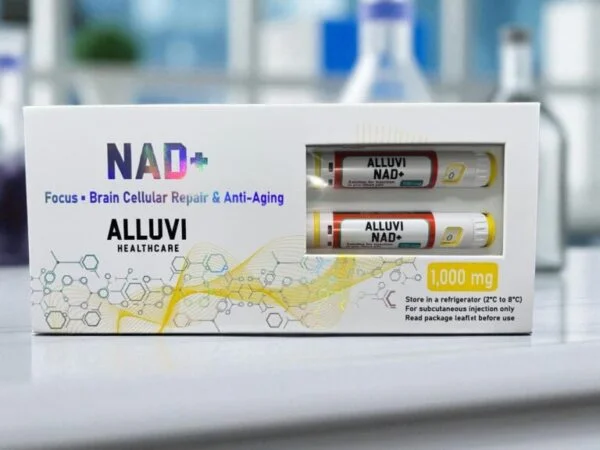
Buy NAD+ 1,000mg peptides Online
NAD+ (Nicotinamide Adenine Dinucleotide) is a fundamental coenzyme and electron carrier molecule central to cellular energy metabolism, redox reactions, and enzymatic regulation. This oxidized form of NAD serves as a critical substrate for poly(ADP-ribose) polymerases (PARPs), sirtuins (SIRT1-7), and CD38/CD157 ectoenzymes, making it indispensable for research into mitochondrial function, cellular aging, metabolic disorders, and neurodegenerative disease models. Buy NAD+ 1,000mg peptides Near me EU
As a buy peptides EU specialist, Euresearchpeptides.com offers NAD+ 1,000mg in its pure, lyophilized form exclusively for laboratory research applications. This high-purity compound is manufactured under strict quality controls and is suitable for in vitro and ex vivo studies including cell culture, enzyme activity assays, and metabolic flux analysis. Buy NAD+ 1,000mg peptides Near me EU
All products are strictly for research use only and comply with EU laboratory standards. Visit our homepage at euresearchpeptides.com to explore our full range of high purity peptides Germany and research chemicals EU compliant products.
Purity Specifications (HPLC/MS Data)
NAD+ 1,000mg from Euresearchpeptides.com undergoes comprehensive analytical testing to ensure research-grade quality:
| Test Parameter | Specification | Method |
|---|---|---|
| HPLC Purity | ≥98.0% | RP-HPLC, UV detection at 254nm |
| Mass Confirmation | 663.43 ± 0.5 Da | ESI-MS |
| Water Content | ≤5.0% | Karl Fischer titration |
| Residual Solvents | ≤0.5% | GC-MS |
| Endotoxin Level | <0.25 EU/mL | LAL test |
| Heavy Metals | ≤10 ppm | ICP-MS |
Each batch is accompanied by a Certificate of Analysis (COA) available upon request. For researchers requiring laboratory peptides Netherlands or peptide supplier Spain documentation, full batch traceability is provided.
Solubility Profile
NAD+ demonstrates excellent solubility in aqueous buffers, making it suitable for a wide range of research applications.
| Solvent | Solubility | Recommendation |
|---|---|---|
| Distilled Water | 93 mg/mL (140.18 mM) | Preferred solvent for stock solutions |
| PBS (pH 7.4) | 85 mg/mL | Suitable for cell culture applications |
| Cell Culture Media | 80 mg/mL | Test for compatibility with specific media |
| DMSO | Insoluble | Not recommended |
| Ethanol | Insoluble | Not recommended |
Stock Solution Preparation
| Target Concentration | 1 mg | 5 mg | 10 mg |
|---|---|---|---|
| 0.1 mM | 15.07 mL | 75.37 mL | 150.73 mL |
| 0.5 mM | 3.01 mL | 15.07 mL | 30.15 mL |
| 1 mM | 1.51 mL | 7.54 mL | 15.07 mL |
| 5 mM | 0.30 mL | 1.51 mL | 3.01 mL |
Calculation basis: Molecular weight 663.43 g/mol
Stability Data
Powder Form (Lyophilized)
-
-20°C (long-term): Stable for 36 months when stored in airtight, light-protected container
-
4°C (short-term): Stable for 6 months
-
Room temperature: Stable for 1 month (avoid humidity)
Solution Form
-
-20°C (frozen): Stable for 6 months; avoid freeze-thaw cycles
-
4°C (refrigerated): Stable for 7-14 days depending on buffer composition
-
Room temperature: Stable for 8-24 hours; degradation accelerates above 25°C
Degradation Indicators
-
Yellowing of solution indicates oxidation
-
Precipitation suggests microbial contamination or buffer incompatibility
-
pH shift beyond 5.5-7.0 range indicates degradation
Recommended Storage Conditions
For optimal preservation of NAD+ 1,000mg for your peptides for research France or peptide synthesis Europe studies:
-
Upon receipt: Store lyophilized powder at -20°C in original container with desiccant
-
After reconstitution: Aliquot into single-use volumes and store at -20°C or -80°C
-
Avoid: Repeated freeze-thaw cycles (limit to 2-3 cycles maximum)
-
Protect from: Light, moisture, and elevated temperatures
-
Stability monitoring: Discard if solution appears yellow or turbid
Reconstitution Guidelines for Research Applications
Proper reconstitution is critical for maintaining NAD+ integrity and ensuring reproducible research outcomes.
Standard Protocol for Aqueous Solutions
-
Equilibration: Allow lyophilized NAD+ vial to reach room temperature (15 minutes)
-
Sterilization: Wipe rubber stopper with 70% alcohol pad
-
Buffer selection: Use sterile, nuclease-free water or PBS (pH 7.4)
-
Volume calculation: Based on desired final concentration (typical range 1-100 mM)
-
Gentle addition: Add buffer slowly down inner glass wall
-
Dissolution: Swirl gently until complete dissolution (30-60 seconds)
-
Avoid: Vortexing or vigorous shaking which may cause degradation
Concentration Guidelines by Application
| Research Application | Recommended Concentration | Buffer System |
|---|---|---|
| Enzyme activity assays | 0.1 – 1.0 mM | Tris-HCl pH 8.0 |
| Cell culture supplementation | 0.1 – 5.0 mM | Cell culture media |
| Sirtuin deacetylation assays | 0.5 – 2.0 mM | NAD+ assay buffer |
| PARP activity studies | 0.1 – 1.0 mM | PARP assay buffer |
| Metabolic flux analysis | 1.0 – 10.0 mM | PBS or custom buffer |
Proper Handling Protocols
Required Safety Equipment
-
Powder-free nitrile gloves
-
Safety goggles
-
Lab coat
-
Work in laminar flow hood for sterile applications
Handling Precautions for research SARMs and NAD+ studies
-
Avoid skin contact; NAD+ is for research use only
-
Do not pipette by mouth
-
Work in well-ventilated area
-
Decontaminate spills with 10% bleach solution
-
Use sterile technique for cell culture applications
Disposal Guidelines
-
Unused NAD+ solution: Deactivate with 10% bleach (15 minutes contact time) before drain disposal
-
Empty vials: Decontaminate before recycling
-
Contaminated materials: Dispose as chemical waste per local regulations
Known Research Applications (with Citations)
Cellular Energy Metabolism Research
NAD+ serves as a critical electron acceptor in biological oxidations, functioning as a major coenzyme in redox reactions. Research applications include:
-
Mitochondrial respiration studies
-
Glycolysis and TCA cycle investigations
-
Oxidative phosphorylation research
Sirtuin Activation Studies
As an essential co-substrate for sirtuins (SIRT1-7), NAD+ enables research into:
-
Deacetylation mechanisms in gene regulation
-
Caloric restriction mimetic studies
-
Cellular stress response pathways
NAD+ Repletion in Disease Models
Clinical research has demonstrated that NAD+ precursor supplementation can elevate blood NAD+ levels significantly. In human trials:
-
1,000 mg doses of nicotinamide riboside produced dose-dependent increases in the blood NAD+ metabolome
-
NAD+ levels rose up to 2.7-fold following oral administration
-
Niacin (750-1,000 mg/day) increased blood NAD+ up to 8-fold in mitochondrial myopathy patients
Metabolic Health Research
Studies investigating NAD+ metabolism in obesity and metabolic disorders:
-
Research on NAD+ precursors and body composition changes
-
Investigations into NAD+ and mitochondrial function in metabolic stress
-
Studies on NAD+ boosting and acetylcarnitine metabolism
Cardiovascular Research
NAD+ research applications in cardiac health include:
-
Heart failure studies examining NAD+ levels and mitochondrial function
-
Safety and tolerability trials of NAD+ precursors in cardiovascular disease models
Neurodegenerative Disease Research
Preclinical studies have explored NAD+ in neurological contexts:
-
Intranasal NAD+ administration in brain injury models
-
NAD+ replacement strategies for Parkinson’s disease research
-
Investigations into NAD+ decline and neurodegeneration
Addiction and Withdrawal Research
Case studies have examined NAD+ intravenous protocols for substance use disorder research at doses of 500-1,500 mg per day.
Safety Considerations
Hazard Identification
-
Not for human or animal consumption
-
For laboratory research use only
-
May cause eye and skin irritation upon contact
First Aid Measures
-
Skin contact: Wash immediately with soap and water for 15 minutes
-
Eye contact: Rinse cautiously with water for several minutes; remove contact lenses if present
-
Inhalation: Move to fresh air; seek medical attention if breathing difficulties persist
-
Ingestion: Rinse mouth; do NOT induce vomiting; seek medical advice
Firefighting Measures
-
Use water spray, alcohol-resistant foam, dry chemical, or carbon dioxide
-
Wear self-contained breathing apparatus for firefighting
Toxicological Information
-
Acute toxicity data limited for research quantities
-
Handle as potential irritant
-
No known mutagenic or teratogenic effects reported in research literature
Why Choose Euresearchpeptides.com
As a premium UE-based online retailer specializing in buy peptides EU, we distinguish ourselves through:
-
EU Warehousing – Fast shipping across Germany, France, Netherlands, Spain, Italy, Belgium, Austria, Switzerland, Sweden, Denmark, and all EU member states
-
Verified Purity – Every batch includes Certificate of Analysis with HPLC/MS data
-
EU Compliance – Full adherence to EU research chemical regulations (REACH, CLP)
-
Discreet Packaging – Research purposes only, professional laboratory packaging
-
Technical Support – Expert guidance for reconstitution and protocol questions
Shop with confidence for all your BPC-157 Europe, GLP-1 research peptides EU, and NAD+ research needs.
SEO FAQ Section – High Commercial Intent
Q1: Where can I buy NAD+ 1,000mg for research purposes in Europe?
You can purchase NAD+ 1,000mg directly from euresearchpeptides.com, a trusted buy peptides EU supplier with warehouse operations across Europe. We offer fast shipping to Germany, France, Netherlands, Spain, and all EU countries. Shop now
Q2: What is the purity of your NAD+ 1,000mg research peptide?
Our NAD+ 1,000mg is tested at >98% purity by HPLC with mass spectrometry confirmation. Each batch includes a Certificate of Analysis. For high purity peptides Germany research standards, we maintain rigorous quality control. View COA
Q3: How should I reconstitute NAD+ powder for my research?
Reconstitute NAD+ in sterile water or PBS (pH 7.4) at your desired concentration. The solubility in water is 93 mg/mL (140.18 mM). For peptides for research France applications, always use sterile technique and avoid vigorous shaking. Reconstitution guide
Q4: What is the molecular weight of NAD+?
The molecular weight of NAD+ (Nicotinamide Adenine Dinucleotide) is 663.43 g/mol with molecular formula C₂₁H₂₇N₇O₁₄P₂. This information is critical for laboratory peptides Netherlands concentration calculations. Technical specs
Q5: How should I store NAD+ 1,000mg?
Store lyophilized NAD+ powder at -20°C for long-term stability (up to 3 years). After reconstitution, aliquot and store at -20°C for up to 6 months. For peptide supplier Spain customers, we provide detailed storage instructions with each order. Storage guide
Q6: What research applications is NAD+ used for?
NAD+ is essential for research into cellular energy metabolism, sirtuin activation, mitochondrial function, metabolic disorders, neurodegenerative diseases, and cardiovascular health. Our research chemicals EU compliant NAD+ supports these advanced studies. Applications
Q7: Do you ship NAD+ to my country in Europe?
We ship to all EU member countries including Germany, France, Netherlands, Spain, Italy, Belgium, Austria, Switzerland, Sweden, Denmark, and more as a leading research SARMs and peptide distributor. Check shipping
Q8: How quickly will my NAD+ order arrive?
EU orders typically arrive within 3-7 business days. Express shipping options available at checkout for BPC-157 Europe and NAD+ research supplies. Order today
Q9: Is NAD+ soluble in DMSO or ethanol?
No, NAD+ is insoluble in DMSO and ethanol. It is highly soluble in water (93 mg/mL) and aqueous buffers. For GLP-1 research peptides EU and NAD+ studies, always use aqueous solutions. Solubility data
Q10: What is your return policy for research compounds?
All research supplies are covered by our quality guarantee. Contact our support team within 14 days of receipt for any peptide synthesis Europe product concerns. Contact us


Reviews
There are no reviews yet.